
Learn about City of Norfolk including our ESG Considerations, News & Press Releases, Projects, and Team.
Talk to us
Have questions? Reach out to us directly.
Learn about City of Norfolk including our ESG Considerations, News & Press Releases, Projects, and Team.
About City of Norfolk
- Population
- 240,183
- GO Bonds Rating
- Aa2/AAA
- Go Bonds Outstanding (as of June 30, 2026)
- $1.209 Billion
Norfolk is centrally located in the Hampton Roads region of Virginia. A thriving city, Norfolk serves as the regional center for employment, healthcare, arts and culture, higher education, and professional sports.
Norfolk has exceptional connectivity and assets. Norfolk is well-connected by air (hosting the Norfolk International Airport), by water (home to the Virginia Port Authority), by rail (e.g., Norfolk Southern, CSX, Amtrak, light rail), and by land (with access to major interstate routes). Norfolk also hosts the largest Naval base in the world.
Norfolk’s is the regional employment hub, hosting over 200,000 jobs across diverse sectors. Norfolk has unique assets that drive visitation from the region and beyond. These assets range from the exceptional glass art collections to opera and broadway shows to year-round cruise opportunities to military history attractions and more.
ESG Considerations
News
Norfolk has endured fire, war, epidemics, segregation, and disinvestment, and each time, its identity has been renewed alongside residents who rebuild and reimagine. As the nation approaches its 250th anniversary, that legacy shapes how Norfolk governs: with communities, not for them.
That philosophy has guided Norfolk as it confronted challenges seen across legacy cities: concentrated poverty, aging public housing, limited mobility, and cycles of violence. Rather than imposing solutions, Norfolk embraced the lesson that meaningful change happens through deliberate civic partnership and shared accountability. Over the past decade, the city has shifted from transactional service delivery to shared governance, embedding residents in the planning, implementation, and evaluation of programs that affect their lives. Engagement is no longer episodic; it is structural. Family support specialists, violence interrupters, neighborhood service hubs, and place-based outreach models have become civic infrastructure rather than one-time interventions. Norfolk’s future is powered by its people.
People First: Stability Powered by People
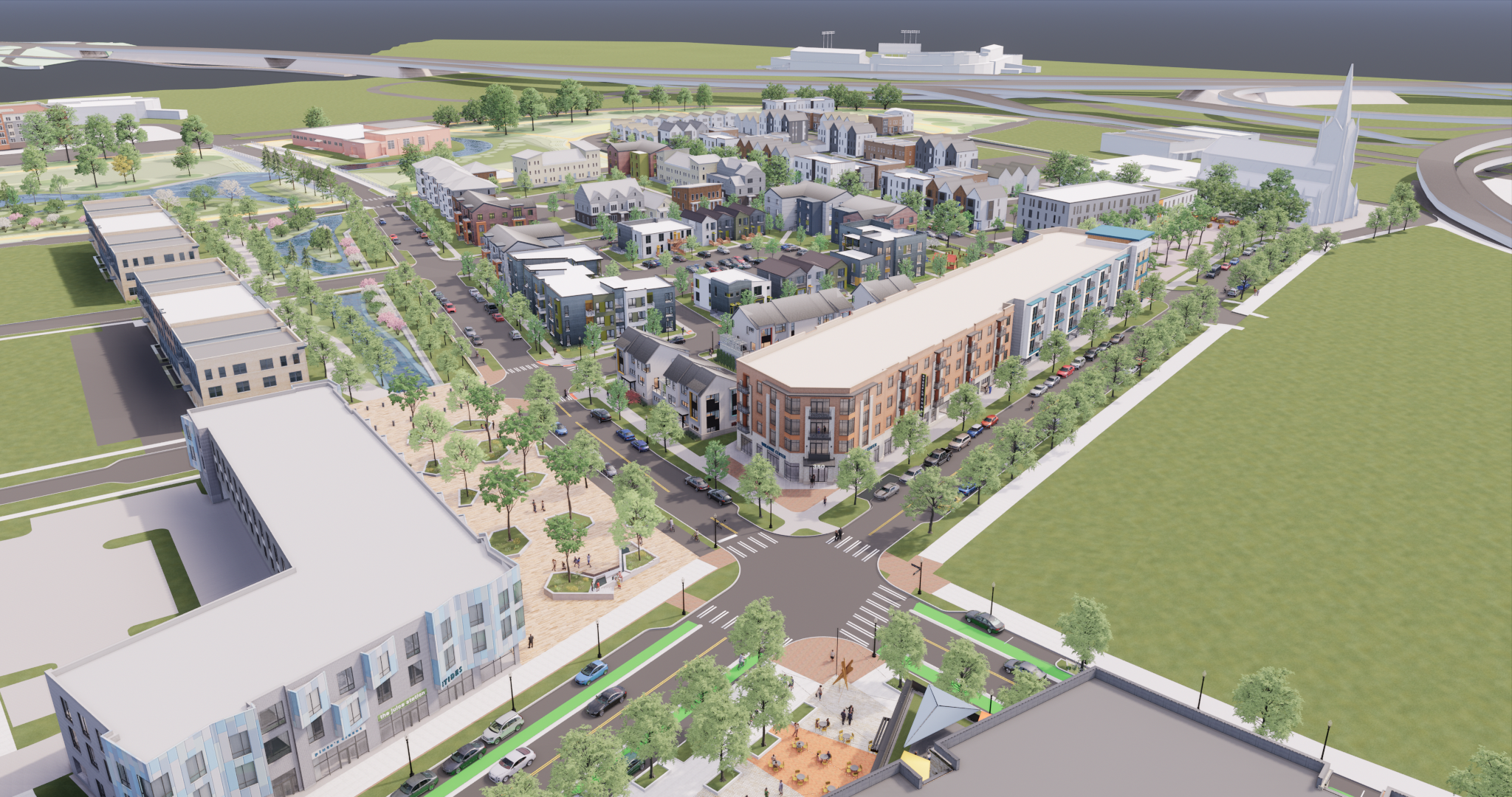
For generations, families in the neighborhoods of Tidewater Gardens, Calvert Square, and Young Terrace built strong social networks rooted in faith, multigenerational relationships, and cultural identity; yet, they were routinely excluded from decisions that shaped their communities. When the city launched the St. Paul’s Transformation, a large-scale redevelopment effort encompassing all three neighborhoods, residents feared it would repeat a familiar national pattern: displacement, disruption, and communities fractured rather than strengthened. Norfolk responded by committing to a fundamentally different approach, one that began not with demolition but with people.
Before any redevelopment began, Norfolk launched People First as the human infrastructure anchoring the St. Paul’s Transformation. Residents helped select home types, green spaces, playgrounds, and even the new neighborhood name, Kindred. Dedicated Family Support, Workforce, Education, and Mobility Specialists work alongside families before, during, and after relocation through a whole-household model spanning developmental screenings for babies, tutoring and workforce exploration for youth, employment coaching and GED preparation for adults, and wellness and social programming for seniors. Advisory committees, resident working groups, and neighborhood briefings convene residents alongside faith partners, educators, and city staff to influence relocation sequencing, service design, and redevelopment timing. When families raised concerns about mid-year moves, timelines were adjusted. More than 94% of Tidewater Gardens households chose to participate.
The results reflect genuine transformation: 89% of participating families are stably housed, 133 residents secured jobs in the most recent year, average annual income has risen to $29,173, high school graduation stands at 92%, and 96% of residents maintain health insurance. Norfolk will apply these lessons to Young Terrace and Calvert Square, continuing to refine data-driven evaluation and resident leadership development as the model expands.
Community 1ST: Safety Powered by People
Five Norfolk neighborhoods, Young Terrace, Calvert Square, Huntersville, Diggs Town, and Oakleaf Forest, carried a disproportionate share of the city’s violent crime. Residents expressed a dual reality: they wanted fewer shootings and safer streets, but they also wanted dignity, respect, and genuine partnership in how safety was achieved. Traditional enforcement was necessary but insufficient to interrupt cycles of retaliation before they escalated.
Norfolk launched Community 1ST, a structured Community Violence Intervention initiative embedded within the Department of Military and Community Affairs and implemented in partnership with community-based organizations. More than 60 credible messengers, all certified in trauma-informed intervention, conduct daily outreach in apartment courtyards, front steps, recreation centers, and schools. Their identifiable blue vests have become a trusted symbol of accessibility and consistency in neighborhoods that once felt overlooked. Biweekly performance reviews bring together intervention leadership, city staff, and public safety analysts to review outreach encounters, conflict mediations, and hotspot patterns alongside police incident data, ensuring prevention resources are deployed strategically. Norfolk Safe Starts extends the model directly into Norfolk Public Schools through mentoring, conflict mediation, and coordinated intervention planning.
Community 1ST has contributed to a 40% reduction in homicides citywide, with the most significant decreases in intervention neighborhoods. A majority of high-risk engagements have resulted in non-violent resolution without retaliatory escalation, and resident perceptions of neighborhood safety have improved measurably. Next steps include expanding Norfolk Safe Starts deeper into schools, strengthening workforce pathways for high-risk youth, and deepening behavioral health referral partnerships.
NeighborCare Norfolk: Belonging Powered by People
Even as housing stability improved through People First and violence declined through Community 1ST, residents identified fragmented access to opportunity. Families described difficulty navigating services spread across multiple offices, agencies, and locations, with transportation constraints, childcare responsibilities, and limited digital access creating structural gaps. Listening sessions surfaced challenges accessing mental health services, healthy food, workforce opportunities, and preventive healthcare. The problem was not the absence of services. Norfolk had strong public, nonprofit, healthcare, and workforce assets. The challenge was coordination, accessibility, and trust.
In response, Norfolk institutionalized NeighborCare as a recurring, place-based service coordination model operating in high Social Vulnerability Index neighborhoods. Guided by the NeighborCare Playbook, each event follows a structured cycle of planning, execution, and debriefing. City agencies, public health representatives, workforce organizations, housing partners, and Community 1ST credible messengers convene directly within neighborhoods, connecting residents onsite to housing navigation, workforce readiness, public health screenings, mental health referrals, youth mentorship, and violence prevention resources. Event timing and workshop topics are adjusted based on resident feedback, ensuring the model remains adaptive. An intergenerational initiative, InterGen, further reinforces civic health by connecting senior volunteers with youth in school settings.
Between August and December 2025, more than 700 residents participated and 50 enrolled directly into services through onsite referrals. InterGen pilot data showed a 28% decrease in behavioral incidents, a 43% reduction in failing grades, and 78% of participating seniors reporting a stronger sense of purpose. The next phase expands geographic coverage, deepens public health and workforce partnerships, and integrates data dashboards to track longitudinal impact.
NORFOLK, Va. – The City of Norfolk has been awarded Gold Certification the third year in a row from the Bloomberg Philanthropies What Works Cities Certification for establishing exceptional data capabilities to inform policy, allocate funding, improve services, evaluate programs and engage residents. The What Works Cities Certification standard reflects the practices, policies and infrastructure municipalities must have in place to effectively harness data for better decision-making. With today’s announcement, 104 cities in North, Central and South America have now achieved the What Works Cities Certification distinction, and 700 cities have submitted assessments since 2017.
“The City of Norfolk is honored to have maintained the What Works Cities Gold Certification, a testament to our commitment to data-driven excellence and innovation,” said Mayor Kenneth Cooper Alexander, Ph.D. “We are proud to have strengthened transparency, improved efficiency and enhanced services that directly benefit our residents and businesses. This recognition reflects the hard work of our employees and our dedication to making Norfolk a more responsive, accountable and forward-thinking city.”
The What Works Cities Certification standard measures a city’s use of data based on 43 criteria. A city that achieves 51–67% of the 43 criteria is recognized at the Silver level of Certification, 68–84% is required to achieve Gold, and 85% or more is required to reach Platinum.
“At a time when people are questioning the role of government, and what good government looks like, governments must be better at using data to know what is and isn’t working – and that is what the Bloomberg Philanthropies What Works Cities Certification stands for,” said Rochelle Haynes, Managing Director of the Bloomberg Philanthropies What Works Cities Certification. “Over one hundred cities are now showing what is possible by investing the time, energy and political capital to shift the culture of how local government works.”
“The Bloomberg Philanthropies What Works Cities Certification is one of the largest-ever philanthropic efforts to improve how local governments use data to improve people’s lives,” said James Anderson, who leads the Government Innovation program at Bloomberg Philanthropies. “This work is helping reform-minded mayors across the Americas bring their organizations into the 21st century. Whether to stem housing shortages, reduce traffic fatalities or improve resident service and responsiveness, these city halls are tapping data, digital and artificial intelligence to rise to the challenge – and we are thrilled to support their progress.”
Norfolk was one of eight cities re-certified under the more rigorous criteria introduced in 2022. The others were Cambridge, Massachusetts; Little Rock, Arkansas; Philadelphia, Pennsylvania; San Diego, California; Scottsdale, Arizona; South Bend, Indiana and Tulsa, Oklahoma.
The What Works Cities Certification program, launched in 2017 by Bloomberg Philanthropies and led by Results for America, is the international standard of data excellence in city governance. The program is open to any city in North, Central or South America with a population of 30,000 or more.
To learn more about the What Works Cities Certification or to take the Assessment, visit whatworkscities.org.
About the Bloomberg Philanthropies What Works Cities Certification:
The What Works Cities Certification program, launched in 2017 by Bloomberg Philanthropies and led by Results for America, is the first-of-its-kind standard of excellence for data-informed, well-managed local government. What Works Cities Certification recognizes and celebrates local governments for their exceptional use of data to inform policy decisions, allocate funding, improve services, evaluate the effectiveness of programs, and engage residents.
About Bloomberg Philanthropies:
Bloomberg Philanthropies invests in 700 cities and 150 countries around the world to ensure better, longer lives for the greatest number of people. The organization focuses on creating lasting change in five key areas: the Arts, Education, Environment, Government Innovation, and Public Health. Bloomberg Philanthropies encompasses all of Michael R. Bloomberg’s giving, including his foundation, corporate, and personal philanthropy as well as Bloomberg Associates, a philanthropic consultancy that advises cities around the world. In 2024, Bloomberg Philanthropies distributed $3.7 billion. For more information, please visit bloomberg.org, sign up for our newsletter, or follow us on Instagram, LinkedIn, YouTube, Threads, Facebook, and X.
About Results for America:
Results for America is helping decision-makers at all levels of government harness evidence and data to make progress on our greatest challenges. Our mission is to make investing in what works the “new normal,” so that when policymakers make decisions, they start by seeking the best evidence and data available, then use what they find to get better results. For more information, visit results4america.org.
November 18, 2025 — The Center for Digital Government (CDG) today announced the winners of the 2025 Digital Cities Survey Awards. The annual survey and awards program recognizes cities that are propelling city government innovation to new heights. From San José’s responsible use of AI to Tamarac’s Smart Parks initiative, this year’s honorees demonstrate how cities are turning technology into trust, measurable impact, and stronger communities.
“What stands out this year isn’t just the technology, it’s the focus on the impact on constituent services,” said Teri Takai, Chief Programs Officer at the Center for Digital Government. “These cities are applying innovation where it matters most: keeping people housed, making streets safer, and building community trust. They’re showing that when technology is guided by purpose, it delivers results that citizens can feel.”
This year’s first-place winners by population category include:
- City of San José, Calif. (500,000 or more)
San José shaped and advanced the GovAI Coalition’s policy agenda, applied privacy-first analytics to prevent housing evictions, and co-developed open-data road safety models with academic and civic partners. Strategic upskilling and data-driven service delivery support an agile, inclusive, and tech-enabled government. - City of Long Beach, Calif. (250,000 – 499,999)
Long Beach advanced cybersecurity, digital equity, and innovation initiatives through programs like Pitch Long Beach! and the Long Beach Collaboratory, increasing resident trust in its city innovation from 47% to over 95%. - City of Scottsdale, Ariz. (125,000 – 249,999)
Scottsdale is modernizing IT and public services through AI initiatives, drone-assisted public safety, and a real-time Smart Water Grid, with a strong focus on community engagement and data security. - City of South Bend, Ind. (75,000 – 124,999)
South Bend enhanced collaboration and community safety via the Real-Time Crime Center and the Commuters Trust transportation program, improving efficiency, accessibility, and the overall resident experience. - City of Tamarac, Fla. (up to 75,000)
Tamarac is boosting operations and digital equity through AI-driven programs like the Omni-Channel Call Center and Smart Parks, supported by multi-year technology planning.
“When government doesn’t work, people don’t trust it,” said San José Mayor Matt Mahan. “By bringing both the technology and the culture of innovation that defines Silicon Valley into City Hall, we’re finally moving the needle on the problems our residents are demanding we solve. Thanks in part to our robust ALPR system, San José is the safest big city in the nation. Thanks to our bus route optimization, we’ve shortened transit commutes by nearly 20%. Thanks to our AI-powered translation services, we’ve increased access to civic life for all our residents. Technology is making our neighbors’ lives better. And with permitting, homelessness prevention, and object detection AI pilots in the works, this is just the beginning.”
“I’m incredibly proud that Long Beach has once again been recognized as a top Digital City for an unprecedented fifth year in a row,” said Lea Eriksen, director of Technology and Innovation and chief information officer for the City of Long Beach. “This honor reflects the hard work of our Technology and Innovation team, our partners across all city departments, and the strong support of our mayor and City Council for investing in technology that truly serves our community.”
Population of 500,000 or more
1st City of San Jose, CA
2nd City of Los Angeles, CA
3rd City of San Diego, CA
4th City of Charlotte, NC
4th City of Seattle, WA
5th City of Boston, MA
6th City of Mesa, AZ
7th City of Austin, TX
8th City of Albuquerque, NM
9th City of Phoenix, AZ
10th City and County of Denver, CO
Population of 250,000-499,999
1st City of Long Beach, CA
2nd City of Wichita, KS
3rd City of Virginia Beach, VA
4th City of Chandler, AZ
5th City of Riverside, CA
6th Town of Gilbert, AZ
7th City of Durham, NC
8th City of Miami, FL
Population of 125,000-249,999
1st City of Scottsdale, AZ
2nd City of Roseville, CA
3rd City of Bellevue, WA
4th City of Columbia, MO
5th City of Norfolk, VA
5th City of Olathe, KS
6th City of Baton Rouge, LA
7th City of Corona, CA
7th City of Frisco, TX
8th City of Grand Prairie, TX
9th City of Rancho Cucamonga, CA
10th City of Alexandria, VA
Population of 75,000-124,999
1st City of South Bend, IN
2nd City of Carson, CA
3rd City of North Port, FL
4th City of Avondale, AZ
5th City of Independence, MO
6th City of Westminster, CO
7th City of Lynchburg, VA
7th City of Roanoke, VA
8th Village of Schaumburg, IL
9th City of Thousand Oaks, CA
10th City of Carlsbad, CA
Population of up to 75,000
1st City of Tamarac, FL
2nd City of Marietta, GA
3rd City of Gainesville, GA
4th City of Coral Gables, FL
5th Village of Tinley Park, IL
6th City of Danville, VA
6th City of Punta Gorda, FL
7th City of Newark, CA
7th City of Delray Beach, FL
8th City of Kalamazoo, MI
9th City of Williamsburg, VA
10th City of Dunwoody, GA
To view the awards article and winner summaries, CLICK HERE.
CDG extends thanks to corporate partners supporting this milestone year: Premier Members – Amazon Web Services, CGI, Smartsheet, and Warshall; Corporate Members – Accela, EY, Genesys, Granicus/Carahsoft, SHI Public Sector, and Tyler Technologies.
Top Priorities Driving City Innovation in 2025
CDG’s survey identifies the top priorities shaping city technology agendas this year, led again by a focus on security, automation, and equity.
- Cybersecurity (top priority for 11th consecutive year)
- AI, Generative AI, and Machine Learning
- Budget and Cost Control
- Business Process Automation
- Constituent/Customer Engagement
- Disaster Recovery and Continuity of Operations
- Business Intelligence and Analytics
- Application Modernization
- Data Governance and Open Data
- Talent Management
Top 5 most pressing challenges your city faced in the past year:
1. Funding constraints including multiyear funding
2. Staff shortages
3. Federal or state policies and/or legal constraints
4. Social issues such as homelessness, immigration
5. Federal or state-mandated responsibilities transferred to cities
Artificial Intelligence (AI)
- On average, two-thirds of cities reported the top areas of GenAI use in cybersecurity, threat detection, and personal productivity.
- More than a third of respondents are actively identifying use cases with GenAI.
- Just over a third have implemented some or all of the survey’s suite of 27 tools, signaling a major shift in digital government readiness.
Celebrating Digital Leadership
Winners will be honored at the Digital Cities Awards Dinner during the National League of Cities “City Summit” on November 19, 2025, at the Hyatt Regency Salt Lake City hotel.
Earlier that day, CDG will host a workshop, “Efficiency, Talent, and Transformation: A Shared Playbook for CIOs and City Leaders,” from 1:00 to 4:30 p.m. MT. The session will bring together technology and city leaders to exchange strategies for operational excellence, workforce innovation, and digital transformation.
About the Center for Digital Government
The Center for Digital Government (CDG) is a national research and advisory institute focused on technology policy and best practices in state and local government. A division of
e.Republic, CDG provides insight, benchmarking, and recognition programs to support innovation across the public sector.
Projects
Team
Talk to us
Have questions? Reach out to us directly.